In my reading and meditating on Paul's letter to the Ephesians, (actually I've been camping on just the first chapter over the past month) the Lord has been answering Paul's prayer for the Ephesians in my own life (verses 16-19). If I may crudely paraphrase - that I may know the LORD better.
After Paul's brief introduction, he jumps right in to doxology, or praise and blessing, unto the God and Father of our Lord Jesus Christ. This doxology is trinitarian - referencing and praising all three Persons of the Godhead. Paul gives a glorious presentation of who God is and what He has done.
Search This Blog
Wednesday, October 12, 2016
Friday, May 13, 2016
Stewardship of the Gospel
The Apostle Paul's account of his salvation experience is truly unique and amazing. Amazing in that God would save a murderer and persecutor of His church! Unique, in that the Lord Jesus Christ appeared to him in a blinding light from heaven and spoke directly to him! The Lord Jesus told Saul (Paul) Who He was and the reason for His appearing to him - namely, to appoint him as a minister and witness to the Gentiles and kings and the sons of Israel. This is what qualified Paul as an apostle of Jesus Christ. But the story doesn't end with Paul's conversion. Wednesday, March 30, 2016
Inerrancy and Faith
It is interesting how independent and differing sources can help to guide you to the same conclusion. I recently finished the book Taking God at His Word by Kevin DeYoung on the suggestion of a friend and brother in Christ who was having members of his church read it. After finishing the book and contemplating my review of it for this blog post, I found myself watching a great video on apologiatv featuring Dr. James White as he refuted critics on discerning how we can determine what does or does not belong in the Bible. In fairness to Dr. White, you should listen to the video linked above. I have oversimplified what was spoken there and it is indeed well worth listening to if you are one who believes the scriptures are "theopneustos" or "God breathed". As he spoke during this interview, Dr. White explained that many of the young people who grow up in churches today are not taught the history of the church and the reality of how the Bible was preserved by God for His people. Many of these young people go off to college believing that the bible simply fell out of heaven in a calf skin cover with verse and chapter references ready to go. Once they get to college, these beliefs are challenged and easily dispelled by those who desire to make shipwreck of the faith.
Wednesday, March 23, 2016
The Joy of the Resurrection in the Book of Daniel
The book of Daniel is one of my favorite books in the Bible. It contains historical facts, such as the fall of Judah and Jerusalem to the Babylonians and the reign of some of the kings of Babylon, Media and Persia. It also contains fulfillment of prophecies of Isaiah and Jeremiah, such as the siege of Jerusalem and the exile of many of the Israelites (specifically Daniel and his three friends). It records miracles of deliverances of Daniel and his friends that only the LORD could accomplish. This book also contains prophecies similar to the book of Revelation, wonderful and terrifying dreams and interpretations, visions, encounters with angels, and a vision of Jesus, the Son of Man, to Whom is given - from God the Father - dominion, Glory, and a kingdom of peoples of every nation and tongue - that has no end! Most importantly, throughout the book, through the dark times of the exile to the great deliverances through the fire of the furnace, from the faithful Daniel to the proud pagan king Nebuchadnezzar, the LORD, God Almighty is recognized as sovereign over all things - as Nebuchadnezzar acknowledges:
"But at the end of that period, I, Nebuchadnezzar, raised my eyes toward heaven and my reason returned to me, and I blessed the Most High and praised and honored Him who lives forever; For His dominion is an everlasting dominion, and His kingdom endures from generation to generation. All the inhabitants of the earth are accounted as nothing, but He does according to His will in the host of heaven and among the inhabitants of the earth; and no one can ward off His hand or say to Him, 'What have You done?'" Daniel 4:34-35
Tuesday, March 15, 2016
Examining Our Inheritance
In my reading of Our Great God and Saviour, by Eric J. Alexander, it was as if I, like Moses, had been placed in the cleft of the rock and had seen the LORD's goodness pass before me! It is too wonderful an experience for a sinful man like me! Mr. Alexander uses the Holy Scriptures to expound and proclaim the greatness of God in 1)His Essence/Being/Character, 2)His Great Salvation (from regeneration to glorification), and 3)in His Church. The LORD is magnified throughout the entire book. His purpose is to help the reader realize how rich we are in having God as our inheritance. There is a great quote at the beginning of the book which still has me thinking. The quote is from a Puritan, Steven Charnock, written over three hundred years ago, which states:
"A mere contemplation of the divine excellences may afford much pleasure to any man who loves to exercise reason. But if that be so, what incomparable sweetness ought believers to find in viewing and considering now these perfections which they will more fully behold hereafter, seeing what manner of God - in whom they have a covenant interest - how wise and powerful, how great, good and holy he is. Indeed, if rich men delight to sum up their vast revenues, to read over their rentals, to look upon their hoards, how much more should the people of God please themselves in seeing how rich they are in having an immensely full and all-sufficient God as their inheritance." - Stephen Charnock, The Attributes of God (Grand Rapids: Baker Book House, reprint 1979), p. 19.
Friday, March 11, 2016
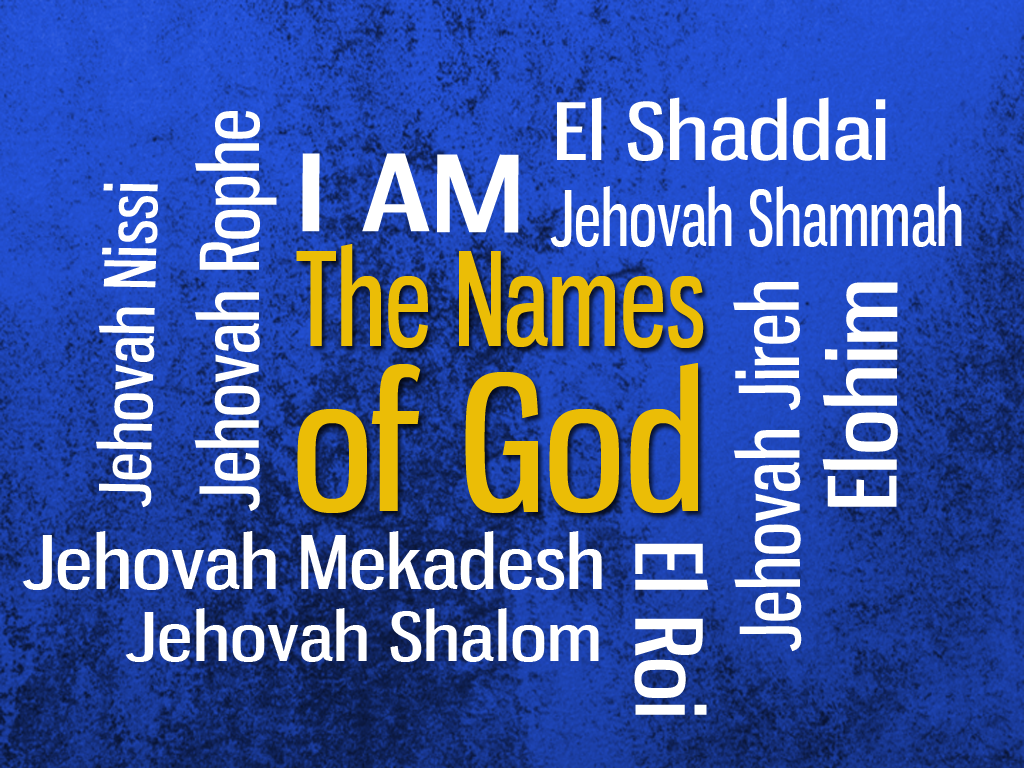
THE NAME / NAMES OF GOD
“I bow down toward Your holy temple and give thanks to Your name
for Your steadfast love and Your faithfulness, for You have exalted
above all things Your name and Your word.” Psalm 138:2
“Therefore also God highly exalted Him, and bestowed on Him the name which is above every name, that at the name of Jesus EVERY KNEE SHOULD BOW, of those who are in heaven, and on earth, and under the earth, and that every tongue should confess that Jesus Christ is Lord, to the glory of God the Father.” Philippians 2:9-11
“And those who know Your name will put their trust in You, for You, O LORD, have not forsaken those who seek you.” Psalm 9:10
I have been blessed through Bible study and the hearing of many sermons on the names of God, especially those of Brian Borgman, the founding pastor at Grace Community Church in Minden, Nevada. Even though I have never met him, his love for and his labor and diligent mining in God’s word have helped me and even encouraged me to labor in God’s word as well. Much of what is written below is summarized from his sermons: The Names of God (Part 1-5). You can listen to them (I highly recommend it!) at sermonaudio.com/gracenevada under the Sermon Series “Systematic Theology”. It is not dull – it will bless you more than you can imagine.
“Therefore also God highly exalted Him, and bestowed on Him the name which is above every name, that at the name of Jesus EVERY KNEE SHOULD BOW, of those who are in heaven, and on earth, and under the earth, and that every tongue should confess that Jesus Christ is Lord, to the glory of God the Father.” Philippians 2:9-11
“And those who know Your name will put their trust in You, for You, O LORD, have not forsaken those who seek you.” Psalm 9:10
I have been blessed through Bible study and the hearing of many sermons on the names of God, especially those of Brian Borgman, the founding pastor at Grace Community Church in Minden, Nevada. Even though I have never met him, his love for and his labor and diligent mining in God’s word have helped me and even encouraged me to labor in God’s word as well. Much of what is written below is summarized from his sermons: The Names of God (Part 1-5). You can listen to them (I highly recommend it!) at sermonaudio.com/gracenevada under the Sermon Series “Systematic Theology”. It is not dull – it will bless you more than you can imagine.
The Chief End of Man
Sunday I will be singing a song in church called "As Long as You Are Glorified". I heard this song for the first time on Pandora one afternoon while driving. It caught my attention immediately as I had never heard it before and the lyrics seemed so true to the teaching of scripture (By the way, the Sovereign Grace channel on Pandora is full of fantastic music). The song asks some pointed questions. Here is a bit of the lyrics:
Shall I take from Your hand Your blessings
Yet not welcome any pain?
Shall I thank You for days of sunshine
Yet grumble in days of rain?
Shall I love You in times of plenty
Then leave You in days of drought?
Shall I trust when I reap a harvest
But when winter winds blow, then doubt?
Shall I take from Your hand Your blessings
Yet not welcome any pain?
Shall I thank You for days of sunshine
Yet grumble in days of rain?
Shall I love You in times of plenty
Then leave You in days of drought?
Shall I trust when I reap a harvest
But when winter winds blow, then doubt?
Wednesday, February 17, 2016
God's Word - Revealing Himself to us
It has been a while since my last post - just getting into my busy time of year. In my vocation as a bean counter, the start of a new year means we have to quickly close-out the prior year, prepare for and endure the financial audit (although for some strange reason I enjoy it - it is like my performance review), do some tax work (not my favorite), develop forecasts for the new year - I usually rub my bald head to get my predictions - just kidding. In my vocation as a husband and father, it is the heart of cheerleading season. Who knew there were cheerleading seasons? Many of these cheer competitions are out of town so there is travel involved. It has taken years but I have learned to appreciate the sport - (my daughters would be proud that I called it a sport). I am the designated driver and photographer. Oh, and my wife's birthday is always during this time for some reason (I have forgotten it many times).
I love God's word! It is His revelation of Himself to us. I am convinced that we could spend eternity searching the scriptures to learn about Him and never scratch the surface! I am also convinced that we need to learn about Him! I am not saying we could ever know everything about Him - He is infinite - we are not. He is eternal. But as Deuteronomy 29:29 says, "The secret things belong to the LORD our God, but the things revealed belong to us and to our sons forever, that we may observe all the words of this law."
Wednesday, January 13, 2016
Enjoyment - The Good and Beautiful Response to God's Gifts
I would like to start out by recognizing my pastor at Zoar Baptist Church, Dr. Kevin Hand, and Brian Borgman of Grace Community Church in Minden, Nevada. Both have helped me to begin to read, study and wrestle with the concepts in book of Ecclesiastes. I have been listening to their sermons and I pray that I will have the attitude toward God mentioned in Chapter 5 - to guard my steps and draw near to listen rather than to offer the sacrifice of fools, to always remember that God is in heaven and I am on the earth so let my words be few, and finally, fear God.
Knowing that God is sovereign over all things, Qoheleth (Hebrew word for the Preacher/Teacher/Solomon) seeks to pursue meaning to all that occurs under the sun, and his conclusion is that all is "hebel" (Hebrew word for emptiness, vanity, vapor, futility, a chasing or striving after the wind). Is the solution to hebel riches, wisdom, pleasure, hard work? The answer is a resounding NO - those too are hebel. Does this conclusion mean that we should forsake wisdom, since both the wise and the foolish share the same end (at least in this life on earth)? Certainly not! But the Preacher is telling us not to pursue these with the hope that they will solve the problems of hebel, or emptiness. Neither should we simply dismiss the emptiness or vanity by covering it over with little positive thoughts, even like "God is in control". While the Preacher would agree that God is sovereign and in control of all things, we still experience and have to deal with hebel.
So how do we wrestle with this hebel - this vanity, emptiness, this vapor of a life. Like laundry - separate, wash, transfer to dryer, dump on couch - i mean get around to folding, put away, repeat. This is a good picture of hebel. Our jobs may seem this way as well. Is working harder, longer, the answer? Is looking back on achievements or accomplishments the answer? Qoheleth, from experience, says no. If we work harder or longer, we may forsake the ones we love and support. On top of that, some who may not work as hard, seem to reap greater rewards than those who do. This too, is hebel. Don't get depressed yet, Solomon is about to make a good observation from this experiences and reflections to help us live with the experience of hebel - emptiness, vanity, futility.
In verse 18 of Chapter 5, Qoheleth says "Here is what I have seen to be good and beautiful: to eat, to drink and enjoy oneself in all one's labor in which he toils under the sun during the few years of his life which God has given him; for this is his reward. Furthermore, as for every man to whom God has given riches and wealth, He has also empowered him to eat from them and to receive his reward and rejoice in his labor; this is the gift of God. There is a perspective that we need - that is to see/understand that all that we have is a gift from God. Our job - a gift from God. Our family - a gift from God. Our wealth/riches - a gift from God. Each breath we take - a gift of God. Our food - a gift from God. Our salvation through Jesus Christ - a gift from God. Now when Solomon says we should enjoy - he's not talking about satisfying our flesh with the pursuit of sinful pleasures.
When we give a gift to a child, what do we want to see? We want to see that child enjoy the gift - observing that child's enjoyment is good and beautiful. We should be the child - enjoying the gifts that God has given us. If we view our work as our own accomplishment or achievement, we will not be satisfied - again, hebel. But if we see the mundane, repetitive job as a gift from God, then we can enjoy the work (yes, even when things don't go our way or when our work is frustrated). Even the ability to have this perspective is a gift from God! Did we deserve the gift? Did we earn/merit the gift? If we work harder/faster/stronger will we be able to hold on to the gift? The answer is no. But we can enjoy the gift while we have it. I must confess that I have not always had this perspective - especially in my work. The LORD is working on me, though and I know He will finish what He has started.
The 1st question and answer in the Westminster Shorter catechism - "What is the chief end of man? Man's chief end is to glorify God and to enjoy Him forever." Oh my soul, your time is but short on this earth - enjoy the gifts that God has given you! Work, eat, sleep as unto the LORD, knowing that he has given them to you as a gift. So when the LORD gives, or the LORD takes away, you can bless His name.
Knowing that God is sovereign over all things, Qoheleth (Hebrew word for the Preacher/Teacher/Solomon) seeks to pursue meaning to all that occurs under the sun, and his conclusion is that all is "hebel" (Hebrew word for emptiness, vanity, vapor, futility, a chasing or striving after the wind). Is the solution to hebel riches, wisdom, pleasure, hard work? The answer is a resounding NO - those too are hebel. Does this conclusion mean that we should forsake wisdom, since both the wise and the foolish share the same end (at least in this life on earth)? Certainly not! But the Preacher is telling us not to pursue these with the hope that they will solve the problems of hebel, or emptiness. Neither should we simply dismiss the emptiness or vanity by covering it over with little positive thoughts, even like "God is in control". While the Preacher would agree that God is sovereign and in control of all things, we still experience and have to deal with hebel.
So how do we wrestle with this hebel - this vanity, emptiness, this vapor of a life. Like laundry - separate, wash, transfer to dryer, dump on couch - i mean get around to folding, put away, repeat. This is a good picture of hebel. Our jobs may seem this way as well. Is working harder, longer, the answer? Is looking back on achievements or accomplishments the answer? Qoheleth, from experience, says no. If we work harder or longer, we may forsake the ones we love and support. On top of that, some who may not work as hard, seem to reap greater rewards than those who do. This too, is hebel. Don't get depressed yet, Solomon is about to make a good observation from this experiences and reflections to help us live with the experience of hebel - emptiness, vanity, futility.
In verse 18 of Chapter 5, Qoheleth says "Here is what I have seen to be good and beautiful: to eat, to drink and enjoy oneself in all one's labor in which he toils under the sun during the few years of his life which God has given him; for this is his reward. Furthermore, as for every man to whom God has given riches and wealth, He has also empowered him to eat from them and to receive his reward and rejoice in his labor; this is the gift of God. There is a perspective that we need - that is to see/understand that all that we have is a gift from God. Our job - a gift from God. Our family - a gift from God. Our wealth/riches - a gift from God. Each breath we take - a gift of God. Our food - a gift from God. Our salvation through Jesus Christ - a gift from God. Now when Solomon says we should enjoy - he's not talking about satisfying our flesh with the pursuit of sinful pleasures.
When we give a gift to a child, what do we want to see? We want to see that child enjoy the gift - observing that child's enjoyment is good and beautiful. We should be the child - enjoying the gifts that God has given us. If we view our work as our own accomplishment or achievement, we will not be satisfied - again, hebel. But if we see the mundane, repetitive job as a gift from God, then we can enjoy the work (yes, even when things don't go our way or when our work is frustrated). Even the ability to have this perspective is a gift from God! Did we deserve the gift? Did we earn/merit the gift? If we work harder/faster/stronger will we be able to hold on to the gift? The answer is no. But we can enjoy the gift while we have it. I must confess that I have not always had this perspective - especially in my work. The LORD is working on me, though and I know He will finish what He has started.
The 1st question and answer in the Westminster Shorter catechism - "What is the chief end of man? Man's chief end is to glorify God and to enjoy Him forever." Oh my soul, your time is but short on this earth - enjoy the gifts that God has given you! Work, eat, sleep as unto the LORD, knowing that he has given them to you as a gift. So when the LORD gives, or the LORD takes away, you can bless His name.
Subscribe to:
Posts (Atom)